
In 1900 the average age of death for men and women in the US was about 47. According to the World Health Organization, in 2014 our life expectancy has risen to 80–an astounding 70% increase over 114 years, or just the last .003% of our 4,000,000 years on the planet. Much has changed in the last century, and that includes the chief causes of death. Look at the following chart–the front row of columns represents causes of death in 1900 compared to 88 years later in the back row:
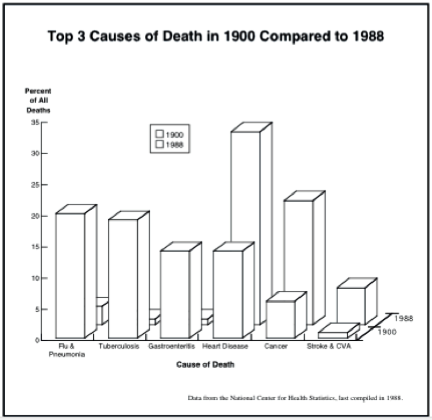
The medical profession needs to change to meet the needs of Americans today, not those of 1800. Improved food preservation, and the inoculation programs and civil engineering (e.g., separating water from sewage systems) have all resulted in a dramatic decrease in acute infectious illness, while “chronic” health problems have increased. We are, as a society, still wed to the glamour of allopathic (machines and drugs) medicine, but our medical needs can no longer be met by an emphasis on curative medicine alone.
Acute illness has declined, while chronic health problems like obesity and lack of exercise have increased to epidemic proportions—these problems will not respond to “magic bullets”; however, low-tech preventive wellness approaches can alter the behaviors which result in chronic illness. While less glamorous, the advantages are that preventive health care is inexpensive, improves life, and has no negative side effects. This is important news given the state of our healthcare cost crisis. It also allows strategies that are more motivating for both patients and doctors alike.
Read on for a description of Allopathic Medicine in the next section.
Acute illness has declined, while chronic health problems like obesity and lack of exercise have increased to epidemic proportions—these problems will not respond to “magic bullets”; however, low-tech preventive wellness approaches can alter the behaviors which result in chronic illness. While less glamorous, the advantages are that preventive health care is inexpensive, improves life, and has no negative side effects. This is important news given the state of our healthcare cost crisis. It also allows strategies that are more motivating for both patients and doctors alike.
Read on for a description of Allopathic Medicine in the next section.